
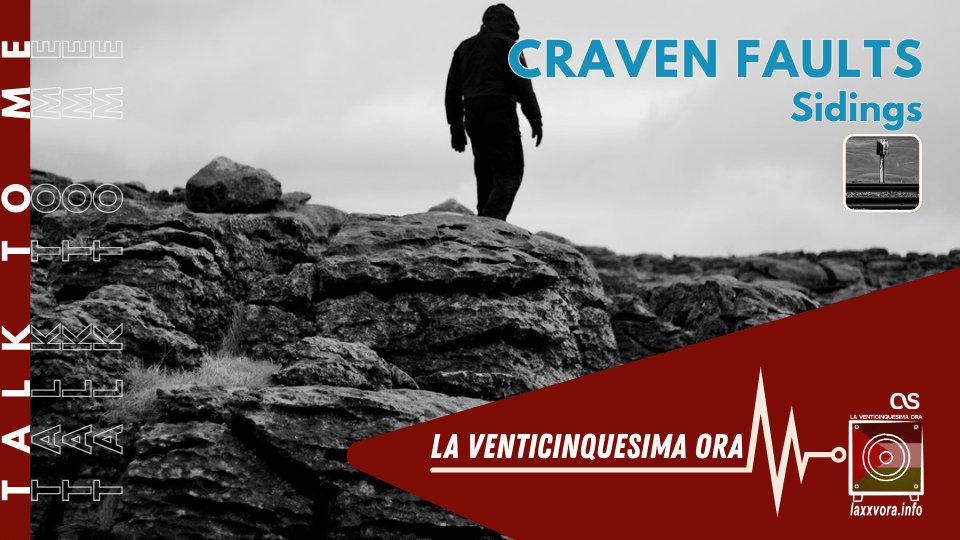
- Band: Craven Faults
- Titolo: Sidings
- Etichetta: The Leaf Label
- Data Uscita: 23 Gennaio 2026
- Provenienza: UK
- Genere: Ambient, Post Industrial
- — — — —
- written & produced by Craven Faults
- mastered by Bo Kondren at Calyx Mastering Berlin
- artwork by Oli Bentley, Split
- photography by Craven Faults
Ci sono artisti che lavorano con il tempo come fosse materia. Craven Faults è uno di questi: un autore che costruisce paesaggi sonori attraverso ripetizioni minime, trasformazioni lente, stratificazioni che emergono solo a chi sa ascoltare con pazienza. La sua musica non descrive un luogo: lo assorbe, lo filtra, lo restituisce come vibrazione.
Con l’arrivo del nuovo album “Sidings” in uscito il 23 Gennaio, abbiamo avuto l’occasione di esplorare il suo processo creativo. Ne è nata una conversazione che sembra essa stessa un territorio: fatta di modular synth, camminate solitarie, archivi industriali, tracce ferroviarie e geografie interiori.
“Yard Loup“ è un brano che sembra dialogare con le origini del progetto. Come si inserisce nel nuovo album e cosa rappresenta per te?
“Yard Loup” è in realtà un precursore di Craven Faults. Contiene già tutti gli elementi che utilizzo: parti che entrano ed escono, la cassa che raddoppia il tempo in modo sottile, una sezione finale, coda, ecc. Ma è stato registrato tre o quattro anni prima dell’uscita del primo EP, quindi in un certo senso è una sorta di modello, anche se breve. Ho sempre avuto l’intenzione di usare “Yard Loup” da qualche parte, e questo nuovo album mi è sembrato il posto giusto. Non so esattamente cosa abbia fatto scattare l’idea originale. Stavo sperimentando le possibilità del synth modulare e ho deciso di affinare le mie idee e concentrarmi sulla produzione di qualcosa di più strutturato, e di iniziare davvero a finire i pezzi invece di passare a qualcosa di nuovo lasciando tutto incompiuto. Cosa stessi pensando in termini geografici non lo ricordo, ma probabilmente nulla di diverso rispetto ai tempi più recenti.
Il tuo lavoro è spesso associato a luoghi specifici: Yorkshire, Cumbria, zone rurali e industriali. Quanto influiscono davvero questi paesaggi sulla tua musica?
È difficile dire come i luoghi fisici influenzino la musica. La musica nasce dall’ascolto di altra musica, da una vita intera di assorbimento di suoni. La musica strumentale non parla necessariamente di qualcosa finché non le si applica un concetto. Quando ho iniziato a produrre musica come Craven Faults, mi è sembrato ovvio che la musica sia il risultato delle caratteristiche delle persone che la fanno. Sono interessato all’ambiente che mi circonda, non solo a dove vivo ma ai luoghi che visito. Trascorro molto tempo nelle zone rurali dello Yorkshire e della Cumbria, generalmente in posti dove poche altre persone vanno. Come tutto questo influenzi il processo creativo è difficile da dire. Lavoro su vari pezzi, forse otto o dieci tracce contemporaneamente; esco a esplorare e fotografare, leggo e faccio ricerche, trovo potenziali titoli, ecc. Alla fine tutte queste informazioni e la musica vengono condensate e raffinate per produrre l’album finale.
La durata, la ripetizione, le micro‑variazioni sono elementi centrali nel tuo linguaggio. Cosa ti attrae di queste forme?
La durata nella musica mi ha sempre interessato, sono sempre stato attratto dai brani lunghi. Trovo molto soddisfacente,in un certo senso ipnotico,ripetere forme semplici, usando pochissime note, senza cambi improvvisi di tonalità o tempo. Mi piace usare cambiamenti sottili, ma anche far sì che la musica cambi costantemente, anche se in modi molto piccoli. I cambiamenti non sono sempre ovvi o nemmeno percepibili, ma se si ascolta con attenzione ci sono molte cose che non sono evidenti all’inizio e che si rivelano col tempo. Penso che le persone ascoltino Craven Faults in modi diversi: per alcuni è un sottofondo per lavorare, altri colgono più dettagli. Sono felice che ognuno trovi il proprio modo di ascoltare; non ho alcun problema se viene apprezzata come musica da avere in sottofondo. Per me, le lunghe trasformazioni lente della mia musica e le strutture dei brani brevi sono variazioni della stessa cosa, modi diversi di esprimere una stessa “sensazione”.
“Sidings“ sembra esplorare linee ferroviarie, trasporti, tracce industriali. Da dove nasce questo immaginario?
“Sidings” è un’esplorazione del movimento di merci e materiali attraverso il paesaggio. Esplorando le brughiere e le valli mi imbatto spesso in miniere abbandonate, fonderie, resti industriali, tutte cose che hanno già influenzato le uscite precedenti. Negli ultimi anni ho letto molto su drovers, percorsi dei muli da soma, linee ferroviarie, ecc. Sono curioso dei sentieri e delle strade che incontro, dei cippi e delle pietre erette che si trovano lungo alcuni percorsi, e delle linee ferroviarie, in uso e dismesse. Perché sono state costruite? Per quale scopo? Anche se si parla del passato, penso che l’idea di trasportare merci su rotaia sia importante anche oggi: è un modo molto più pulito di spostare beni. Sidings è davvero un altro aspetto della scoperta nata dal tempo trascorso esplorando.
Craven Faults costruisce musica come si costruisce una mappa: per strati, per linee, per ripetizioni che rivelano differenze minime. “Sidings” è un nuovo capitolo di questa cartografia sonora, un disco che non descrive il paesaggio, ma lo attraversa, lo assorbe, lo trasforma in durata.
Un ascolto che chiede tempo, ma che restituisce profondità.
English Version 🇬🇧
Your new single Yard Loup feels like a slow, unfolding landscape — patient, textural, and quietly tense. What sparked the initial idea for the track, and what were you exploring sonically or geographically while shaping it?
Yard Loup is really a precursor to Craven Faults. It has all the ingredients I use, track parts fading in and out, kick drum subtly doubling in tempo, an end section/coda etc, but it was actually recorded 3 or 4 years before the the release of the first EP, so in some ways it’s a kind of template, although a short one. I have always intended to use Yard Loup somewhere and this new album seemed the right place for it. I don’t know exactly what sparked the original idea. I had been experimenting with the possibilities of the modular synth and made the decision to refine my ideas and concentrate on producing something more structured, and actually start to finish pieces instead of moving on to something new and leaving things incomplete. What I was thinking about geographically, I don’t remember but probably nothing different from more recent times.
Your music often seems to map physical spaces — mills, railways, rural edges — as much as emotional ones. How do specific locations or histories influence the way a piece begins to take form?
It’s difficult to say how physical locations affect the music. The music comes from listening to other music, a lifetime of absorbing music and sound. Instrumental music it isn’t necessarily about anything until some kind of concept is applied. When I started to produce music as Craven Faults it seemed obvious that music is a result of the characteristics of the people making it. I’m interested in my surroundings, not simply where I live but places I go to. I spend a lot of time in rural Yorkshire and Cumbria, generally in the places few other people visit. How this informs the creative process is difficult to say. I work on various pieces, perhaps 8 or 10 tracks ongoing at any one time, I’m out exploring and photographing, reading and researching ideas, coming up with potential track titles etc. Eventually all this information and music is condensed and refined to produce the final album.
Repetition and gradual transformation are central to your sound. What draws you to this slow-evolving structure, and what does it allow you to express that more traditional forms might not?
Duration in music has always interested me, I am always drawn to long tracks. I find repetition of simple forms, using very few notes, no sudden changes of key or tempo very satisfying, hypnotic in some ways. I like to use subtle changes but also have the music changing constantly, even if in only very small ways. The changes are not always obvious or even noticeable but if you listen carefully there should be many things which are not at first apparent but will reveal themselves. I think people listen to Craven Faults in different ways, for some it’s a background sound for working to, others will pick up more of the details. I’m happy that people find their own ways of listening, I really have no problem with it being appreciated as something to have in the background. To me, the long slow transformations of my music and the structures of short songs are variations on the same thing, different ways of expressing the ‘feel’.
Your upcoming album Sidings is about to be released. What themes, images, or questions guided its creation, and how does it expand or shift the Craven Faults landscape?
Sidings is an exploration of the movement of goods and freight across the landscape. Exploring the moors and the dales I’m always coming across abandoned mines and smelt mills, industrial decay etc, all the things which have informed previous releases. Over the past couple of years I have been reading about drovers, packhorse routes, railway lines etc. I’m curious about the tracks and lanes I come across and the marker posts and standing stones found on some routes, and the railway lines, used and disused. Why were they built? For what purpose? Even though this is about the past I think the idea of moving freight by rail is important for today, it’s a far cleaner way of transporting goods. Sidings is really another aspect of discovery from time spent exploring.


 La Venticinquesima Ora
Lascia un commento