
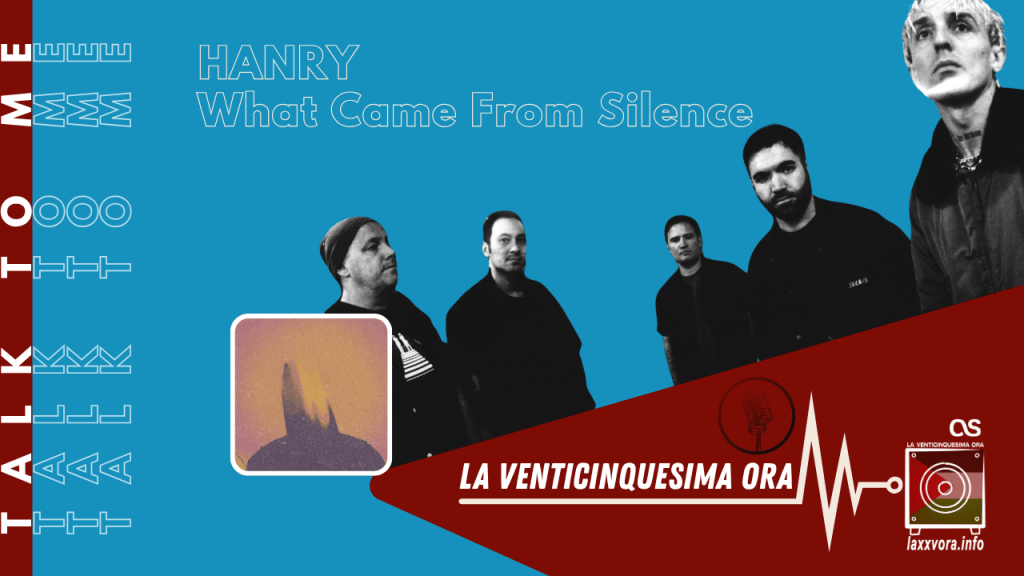
- Band: Hanry
- Titolo: What Came From Silence
- Etichetta: Pelagic Records
- Genere/Stile: Post-Rock
- Paese: Rennes, Francia
- Uscita: 29 maggio 2026
Abbiamo incontrato gli Hanry sul nostro cammino per la prima volta a gennaio 2025, quando Disruption è entrato nel nostro ascolto con la forza silenziosa di qualcosa che resta con noi. È stato in particolare il brano Ether a farci fermare: un brano che ha aperto una fenditura, una vibrazione che continuava a risuonare anche dopo la fine. Da lì è iniziato tutto. Prima la curiosità, poi l’attesa, poi quella forma di dedizione che nasce quando una band riesce a parlare direttamente a una parte del nostro ascolto più sensibile.
Da allora seguiamo ogni loro passo con attenzione, lasciando che ogni nuova uscita apra un’altra stanza del loro mondo. Con What Came From Silence, il loro album in uscita abbiamo sentito che quella stanza si allargava, che qualcosa stava maturando in profondità.
Abbiamo voluto entrarci insieme a loro. Le risposte che seguono ci sono state gentilmente fornite da Anthony Leliard.
Intervista
What Came From Silence sembra un disco costruito attorno allo spazio, alla risonanza e alla sottrazione. Qual è stata la prima immagine o sensazione che ha dato forma all’album?
L’album è stato scritto durante un inverno particolarmente lungo e rigido in Bretagna, e quell’atmosfera probabilmente si percepisce in tutto il disco. C’è una certa tensione mescolata a una profonda introspezione che lo attraversa.
Fin dall’inizio di Hanry, l’immaginario cinematografico è stato al centro della nostra visione artistica. Spesso componiamo a partire da immagini mentali, paesaggi o scene che potrebbero quasi appartenere a un film.
Volevamo anche giocare con variazioni di intensità e di umore, in modo che l’album potesse essere vissuto come un tutto unico, quasi come un’unica composizione continua. L’idea è che l’ascoltatore possa immergersi completamente e proiettare in esso le proprie emozioni.
Il vostro EP Disruption aveva una tensione più immediata e grezza, mentre il nuovo album si muove verso una gravità emotiva più lenta e profonda. Come è avvenuta questa transizione per voi?
Scrivere un album completo ci ha dato l’opportunità di creare un corpo di lavoro coeso e di esplorare il nostro universo musicale con molta più profondità rispetto a un EP. Il nostro secondo EP, Disruption, è stato un punto di svolta. Ci ha aiutato a definire più chiaramente la direzione che volevamo prendere. Con questo album abbiamo abbracciato pienamente il nostro lato elettronico e ambient, mantenendo al tempo stesso l’energia potente ed epica che definisce Hanry.
Rennes ha una scena underground forte, intima ma profondamente connessa ai circuiti europei post‑metal e post‑rock. Come influenza il vostro suono la città, e come vi sentite inseriti nel panorama europeo più ampio?
Storicamente, il rock è entrato in Francia attraverso la città di Rennes, in particolare grazie al festival Transmusicales, che quest’anno celebra il suo 49º anniversario. Abbiamo avuto la fortuna di far parte della lineup e di suonare davanti a più di 3.000 persone in un locale sold out. Per una band post‑rock è qualcosa che non accade molto spesso, e riflette davvero l’impegno di Rennes nel promuovere la musica locale e indipendente. Si può ancora percepire quell’eredità rock nel lavoro degli artisti e delle band degli ultimi vent’anni.
La vostra musica ha una dimensione fisica: texture, respiri, vibrazioni, il senso di una stanza. Quanto è importante la materialità del suono nel vostro processo creativo?
Possiamo passare intere giornate a esplorare un singolo suono, perdendoci dentro di esso, modellandolo finché non rivela qualcosa di più profondo. A volte un brano nasce interamente da questo: da una vibrazione, una sensazione fugace, un suono che ci porta altrove e improvvisamente fa emergere delle immagini. La musica strumentale apre un modo diverso di ascoltare. Senza parole, invita a sentire le cose in modo differente. Senza una voce che guidi o rassicuri, tutto ciò che rimane è la materia grezza del suono: texture, atmosfere, movimento. E al centro di tutto, un’immagine persistente, a volte sfocata, a volte nitida. La sua forma non conta davvero, finché permette all’ascoltatore di viaggiare, sentire, immaginare oltre sé stesso.
C’è una forte vulnerabilità emotiva nel vostro lavoro, qualcosa che appare fragile e pesante allo stesso tempo. Da dove nasce questo linguaggio emotivo per voi?
Nasce principalmente dal bisogno di esprimere cose che non sempre riusciamo a mettere in parole. La musica diventa uno spazio in cui possiamo essere completamente onesti, senza alcun filtro. È un equilibrio fragile tra qualcosa di molto intimo e il desiderio di lasciarlo esistere liberamente. Questo linguaggio emotivo è plasmato anche attraverso il suono stesso. Alcune texture e armonie portano già in sé un senso di malinconia o tensione. Se quella fragilità emerge, probabilmente è perché cerchiamo semplicemente di essere il più sinceri possibile in ciò che facciamo.
Il titolo What Came From Silence suggerisce qualcosa che emerge, si forma o viene rivelato. Cosa rappresenta il “silenzio” nella narrazione del disco?
Il silenzio, nella narrazione del disco, è davvero il punto di partenza. Si tratta di raccontare una storia senza parole, partendo da una pagina bianca, con solo il bisogno di esprimere qualcosa, senza ancora sapere cosa prenderà forma. Ogni brano emerge da quello spazio, dalla calma, quasi dal vuoto, un luogo in cui le emozioni esistono già ma restano indefinite. Vediamo il silenzio come un materiale vivo, piuttosto che come un’assenza. Contiene già tensione e fragilità. La musica rivela gradualmente ciò che vi è contenuto, senza mai riempirlo completamente. Come disse Claude Debussy: “La musica è lo spazio tra le note. E “What Came From Silence” è esattamente questo: tutto ciò che è emerso da quello spazio.”
Mentre vi preparate all’uscita dell’album, cosa sperate che gli ascoltatori sentano o scoprano entrando in questo nuovo spazio che avete creato?
Speriamo che ognuno possa fare proprio l’album, interpretandolo liberamente a seconda del proprio stato d’animo, senza necessariamente cercare di capire ciò che noi volevamo esprimere come artisti.
Intervista integrale in inglese (Q&A)
“What Came From Silence” feels like a record built around space, resonance, and restraint. What was the first image or sensation that shaped the album?
The album was written during a particularly long and harsh winter in Brittany, and that atmosphere can probably be felt throughout the record. There’s a certain tension mixed with deep introspection that runs through it. Since the beginning of Hanry, cinematic imagery has been at the core of our artistic vision. We often compose from mental images, landscapes or scenes that could almost belong to a film. We also wanted to play with variations in intensity and mood so that the album can be experienced as a whole, almost like a single continuous piece. The idea is for the listener to fully immerse themselves and project their own emotions into it.
Your previous EP Disruption had a more immediate, raw tension, while the new album moves toward a deeper, slower emotional gravity. How did this transition happen for you?
Writing a full-length album gave us the opportunity to create a cohesive body of work and to explore our musical universe in much greater depth than with an EP. Our second EP, Disruption, was a turning point. It helped us define more clearly the direction we wanted to take. With this album, we fully embraced our electronica and ambient side while keeping the powerful and epic energy that defines Hanry.
Rennes has a strong underground scene, intimate yet deeply connected to the European post-metal and post-rock circuits. How does the city influence your sound, and how do you feel you fit within the broader European landscape?
Historically, rock music entered France through the city of Rennes, notably thanks to the Transmusicales festival, which is celebrating its 49th anniversary this year. We were lucky enough to be part of the lineup and to play in front of more than 3,000 people in a sold out venue. For a post rock band, that’s something that doesn’t happen very often, and it really reflects Rennes’ commitment to promoting local and independent music. You can still feel that rock heritage today in the work of artists and bands from the past twenty years.
Your music carries a physical dimension, textures, breaths, vibrations, the sense of a room. How important is the materiality of sound in your creative process?
We can spend entire days exploring a single sound, getting lost in it, shaping it until it reveals something deeper. Sometimes a track is born entirely from that, from a vibration, a fleeting sensation, a sound that takes us somewhere else and suddenly brings images to the surface. Instrumental music opens up a different way of listening. Without words, it invites you to feel things differently. With no voice to guide or reassure you, all that remains is the raw material of sound: textures, atmospheres, movement. And at the center of it all, a persistent image, sometimes blurred, sometimes vivid. Its form doesn’t really matter, as long as it allows the listener to travel, to feel, to imagine beyond themselves.
There’s a strong emotional vulnerability in your work, something that feels both fragile and heavy. Where does this emotional language come from for you?
It mainly comes from a need to express things we can’t always put into words. Music becomes a space where we can be completely honest, without any filter. It’s a fragile balance between something very intimate and a desire to let it exist freely. That emotional language is also shaped through sound itself. Certain textures and harmonies already carry a sense of melancholy or tension. If that fragility comes through, it’s probably because we’re simply trying to be as sincere as possible in what we do.
The album title, What Came From Silence, suggests something emerging, forming, or being revealed. What does “silence” represent in the narrative of the record?
Silence, in the narrative of the record, is really the starting point. It’s about telling a story without words, beginning from a blank page, with just the need to express something, without yet knowing what will take shape. Each track emerges from that space, from calm, almost from emptiness, a place where emotions already exist but remain undefined. We see silence as a living material rather than an absence. It already holds tension and fragility. The music gradually reveals what lies within it, without ever completely filling it. As Claude Debussy once said, “Music is the space between the notes. And What Came From Silence is exactly that, everything that emerged from that space.
As you prepare to release the album, what do you hope listeners will feel or discover when entering this new space you’ve created?
We hope that everyone can make the album their own, interpreting it freely depending on their state of mind, without necessarily trying to understand what we intended to express as artists.


 La Venticinquesima Ora
Lascia un commento