

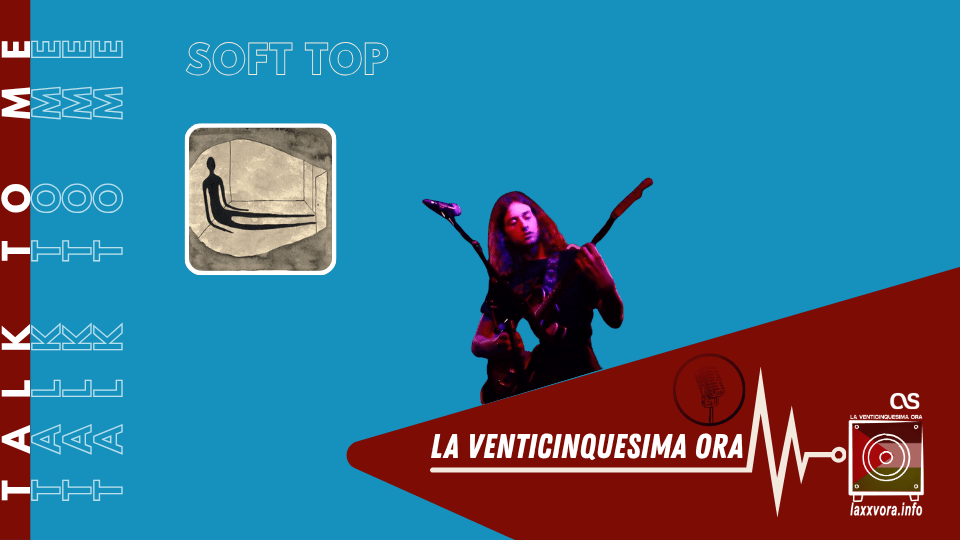
- Band: Soft Top
- Titolo: Gathering Dust
- Etichetta: Crafting Room Recordings
- Genere/Stile: Indie Rock
- Paese: Brighton, UK
- Uscita: 1 Giugno 2026
“Gathering Dust“, il nuovo lavoro dei Soft Top è un album che si muove con delicatezza, costruito su micro‑gesti, respiri, dettagli che emergono solo quando ci si concede il tempo di ascoltarli in profondità.
La band, un collettivo di sei musicisti, lavora su un equilibrio raro, una scrittura narrativa molto precisa e una produzione che lascia spazio, aria, morbidezza.
Il disco nasce da un’idea forte, raccontare una storia ambientata in un mondo comatoso, sospeso tra sogno e realtà. Da qui si sviluppa un linguaggio sonoro che unisce organicità, intimità e una cura quasi cinematografica per il colore, sia musicale che visivo. È un LP che guarda al presente ma potrebbe appartenere a qualsiasi epoca tra gli anni ’70 e il nostro tempo, con un’attenzione particolare alla durata emotiva dei suoni.
Abbiamo parlato con Miles e con la band per entrare nel cuore di questo universo: una conversazione aperta, generosa, in cui emergono metodo, sensibilità e una visione molto chiara di ciò che significa essere “soft” oggi. L’intervista è stato un bel dialogo, in un momento in cui la band era divisa tra sessioni, lavoro e tour. Ne è uscita una conversazione sorprendentemente fluida, si parla di scrittura come narrazione, di colori che diventano musica, di produzione come gesto di sottrazione, di un protagonista sospeso tra due mondi.
Di seguito riportiamo prima la versione italiana, e subito dopo la versione inglese integrale.
Intervista
La vostra musica è incredibilmente tattile, calda, quasi fisica. Quando scrivete, pensate al suono come qualcosa che tocca l’ascoltatore, oppure quella morbidezza nasce dal modo in cui vi relazionate tra voi?
Quando scriviamo, di solito la storia di ciò che vogliamo dire viene prima di tutto. Soprattutto con questo album, avevamo molti testi già pronti prima della musica, quindi quando abbiamo lavorato agli arrangiamenti volevamo che l’aspetto strumentale rappresentasse la storia di ogni brano. Per esempio, volevamo che Paving Stones suonasse come qualcosa che potresti sentire nella tua testa mentre cammini al crepuscolo in una sera d’estate, magari fumando una sigaretta andando verso un bar o tornando a casa, con i testi che riflettono il tuo monologo interiore. Molto spesso, però, la band sembra avere una comprensione innata di come abbinare i miei vocali, quindi molte cose vengono naturali.
Il vostro immaginario visivo è molto coerente: toni smorzati, luce naturale, una calma cinematografica. In che modo la vostra identità visiva influenza la musica, e come la musica influenza il modo in cui vi immaginate visivamente?
Sono molto sensibile ai colori in relazione alla nostra musica: ogni brano, quando chiudo gli occhi, ha un colore diverso. Your Aching Words per me è piena di viola e tocchi di arancione; Paving Stones ha sempre avuto una palette seppia/beige e rossa. Siamo stati fortunatissimi a lavorare con la nostra amica June Stewart, che ha curato tutta la grafica dell’album e dei singoli. Ha una capacità incredibile di tradurre i miei pensieri e sensazioni in dipinti e disegni concreti. Per foto e video, discutiamo un’idea e la nostra fotografa Ele Marchant capisce sempre quale lente o macchina usare per catturare ciò che vogliamo.
Your Aching Words suggerisce che il linguaggio può ferire ma anche lenire. Che ruolo hanno le parole nel vostro songwriting? Sono un punto di partenza o arrivano dopo?
Dipende da ciò che vogliamo ottenere. Per questo album molti testi sono arrivati prima della musica, ma a volte partiamo da un groove o da una jam e poi scriviamo da lì. Molto è questione di sensazione. Se decidi un’emozione, una storia, un messaggio, una prospettiva o dei personaggi, e costruisci la musica attorno a questo, il risultato riflette meglio gli elementi emotivi del testo.
Sono un grande fan del racconto attraverso i testi e dell’uso di situazioni reali. Not Enough nasce da una frase che ho sentito dire da una donna al telefono su un autobus a Londra: “Mi sconvolge ogni volta: sembrano restare finché non si annoiano, o finché io divento troppo.” L’ho scritta subito nelle note del telefono.
La vostra produzione è minimale ma molto dettagliata: piccoli gesti, texture sottili, spazio. Come lavorate a questi elementi? Tendete a togliere o a costruire strato dopo strato?
Siamo molto fortunati perché uno dei nostri membri, Bobby Smyth, è un produttore incredibile. Molti dettagli arrivano da lui. Parliamo delle influenze e di come vogliamo che qualcosa suoni in studio, e poi Bobby fa la sua magia. Ha registrato e prodotto tutto ciò che abbiamo pubblicato: c’è una fiducia totale nel suo modo di capire cosa tirare fuori da un brano. Per questo album guardavamo molto ad artisti come Clairo, Andy Shauf, Adrienne Lenker e al loro uso dello spazio. Abbiamo anche sovrainciso troppo alcune canzoni, e poi abbiamo tolto elementi in fase di mix per creare spazio.
Quale territorio emotivo o sonoro volevate esplorare con le nuove uscite?
Cerchiamo sempre di scrivere brani che tocchino le emozioni delle persone, con delicatezza. Molte esperienze descritte — anche se la storia dell’album si svolge in un mondo comatoso — sono riconoscibili. I temi principali sono perdita, negoziazione, amore, desiderio, all’interno di una riflessione su vita/morte, realtà e sogno. Dal punto di vista sonoro volevamo creare qualcosa che potesse sembrare uscito nel 2026, o nel 1976, o in qualsiasi punto tra i due. Sono un grande sostenitore dell’uso di suoni organici: pochi elementi digitali, per creare qualcosa che suoni bene anche tra vent’anni.
La vostra musica sembra una conversazione. Come si incontrano le vostre sensibilità in studio? Avete ruoli definiti o tutto è condiviso?
Siamo una band di sei persone. La scrittura principale arriva da me, Austin Pritchard (chitarra, voce) e Bobby Smyth (clarinetto, chitarra, sax, synth, produzione). Attorno a noi, per questo album, c’erano Charlie Bogg al basso, Owen Bullock alla batteria e Oakley Flavell al violoncello, tutti fondamentali nella scrittura delle loro parti. Se c’è una conversazione nei brani, è tra il protagonista, la sua coscienza e le persone nel mondo reale che teme lo stiano lasciando indietro mentre lui è nel coma “Gathering Dust”.
C’è una morbidezza nel vostro suono che sembra intenzionale. La “softness” per voi è una scelta estetica, un mood o un modo di stare al mondo?
Ci siamo sempre descritti come “Soft music for soft people”. Gli arrangiamenti e la produzione sono scelte consapevoli, e alcuni brani non sono finiti nell’album perché non si adattavano a questo suono. Non so se questo definirà sempre il nostro sound, magari faremo una svolta totale, ma per questo album volevamo che tutto fosse morbido, sicuro, caldo, come una grande coperta. Dato che la storia si svolge in un mondo onirico, avevamo bisogno che suonasse come un sogno lucido, con momenti di incertezza, soprattutto nel climax finale: quando il protagonista capisce di essere in coma e deve decidere se svegliarsi o restare nel calore del sogno.
ENGLISH VERSION (Q&A)
Your music feels incredibly tactile, warm, almost physical. When you’re writing, do you think of sound as something that touches the listener, or does that softness come naturally from the way you relate to each other as a duo?
When we are writing, usually the story of what we’re trying to say comes first. Especially with this album, we had a lot of the lyrics in place before the music came, so when arranging the instrumentation, we wanted it to represent each track’s story. For example, we really wanted Paving Stones to feel like something you’d hear in your head, walking through the dusk of a hot summer eve, maybe smoking a cigarette on the way to a bar or home from a bar, with the lyrics kind of reflecting the thoughts going through your head, your internal monologue. A lot of the time though, the band seem to have an innate understanding of how to sonically match my vocals, so there’s not usually lots of communication around the part writing decisions, a lot comes naturally.
The visual world around Soft Top is so coherent: muted tones, natural light, a kind of cinematic calm. How does your visual identity shape the music, and how does the music reshape the way you imagine yourselves visually?
I get quite funny about colours with our music, each track when I close my eyes feels like it has a different colour to it, Your Aching Words for example feels like a lot of purples and bits of orange, Paving Stones always had a sepia/beige and red palette. We were hugely lucky to start working with a friend of ours, June Stewart, who has designed all the artwork for the album and it’s singles, and she just seems to have an incredible understanding of how to translate my feelings/thoughts to tangible paintings and drawings. In terms of the photo and video aspects, again we’d discuss an idea, and our photographer Ele Marchant without much prompt seems to know every time what type of lens, or camera to use to best capture what we want.
Your Aching Words suggests that language can wound but also soothe. What role do words play in your songwriting: are they a starting point, or do they emerge only after the emotional landscape of the song is already there?
It depends entirely on what we want to achieve with the track, for this album a lot of the lyrics came before anything else, but sometimes we have a groove or a jam and then write from that, depending on what the track feels like. A lot of it is feel, it has to be said. I think if you can decide on an emotion, a story or message and a perspective (first/second/third person etc) or characters, and then build the music around that it reflects the emotional elements of the lyrics a lot more. I’m personally a huge fan of storytelling through lyrics, and taking real life scenarios and using them in songs. Not Enough (our final single from the album) starts with an almost identical quote that I heard a woman saying to her friend on the phone, whilst sitting on a bus in London, presumably talking about her love life: “It blows my mind every time, they seem to stick around until they’re bored, or I’m too much”. I heard this and immediately wrote it in my phone notes, so, if you’re reading this, I’m sorry that you were going through that but thank you for the lyric!
Your production is minimal but incredibly detailed: small gestures, subtle textures, breath, space. What does your creative process look like when you’re shaping these sonic details? Do you tend to strip things away, or build layer by layer until the song feels right?
We’re very lucky, as one of our members Bobby Smyth happens to be an incredible producer (as well as a multi-instrumentalist and songwriter) so a lot of the production detailing comes from him. We’ll talk about influences and how we want something to sound in a studio environment, and then Bobby works his magic! He engineered and produced everything we’ve released, there’s a real trust there that he knows exactly what to pull out of a track sonically, and how to get it to where we want it to be. I think for this album we were looking at artists like Clairo, Andy Shauf, Adrienne Lenker and how they use space to create more impactful moments, we actually ended up over-tracking some of the songs (I would argue!) and then reductively mixing out certain elements to create the space.
What emotional or sonic territory were you trying to explore with yours new releases?
We always approach songs to try and pull at people’s feelings, very gently. I’d like to think a lot of the experiences described (even though the album’s story takes place within a comatose world) are quite relatable. The key themes are loss, bargaining, love, lust set within a discussion around life/death, reality and dreams. Sonically we wanted to create something that sounded like it could’ve been released in 2026, or 1976, and anywhere in between. I’m a big big advocate for keeping things as organic as possible sonically, so there isn’t a lot of digital sounds on the album – there is a few! – but we wanted to create something that would still sound good in 20 years, and that nods to our influences whilst still sounding fresh. As high a demand as that is!
Your chemistry is palpable, the music feels like a conversation, even when only one voice is singing. How do your individual sensibilities meet in the studio? Do you have defined roles, or is everything fluid and shared?
We operate as a band of 6, with the main songwriting coming from myself, Austin Pritchard (guitar, vocals) and Bobby Smyth (Clarinet, Guitar, Saxophone, Synth, production). Around us for this album we had Charlie Bogg on Bass, Owen Bullock on Drums and Oakley Flavell on Cello, all of whom contributed a huge part to the tracks with their part writing. A lot of the lyrics for this came from me, and when we recorded there’s BV’s from almost everyone I think as well, I guess if a conversation is happening within the tracks it’s between the protagonist, his conscience, and the people back in the real world who he fears are leaving him behind whilst he’s in the coma ‘Gathering Dust’ (hence the album name haha!).
There’s a softness in your sound that feels intentional, almost like a statement. Do you see “softness” as an aesthetic choice, a mood, or a way of being in the world?
We’ve always described ourselves as ‘Soft music for soft people’, consciously the arrangements and production are a choice, and there were other tracks that didn’t make the cut for the album because sonically they just didn’t seem like they fit. I don’t know if this is definitively the sound of the band, because who knows what our next releases will sound like, maybe we’ll be take a huge left turn who knows! But for this definitely we wanted everything to feel soft, safe and warm, like a big warm blanket. Especially as the album takes place inside a dream world, we needed it to feel like a lucid dream, with some moments of uncertainty or tension, particularly with the story’s climax at the end of the album – where the main character knows hes in a coma and knows he has to wake up or face death. This is the track where his internal monologue is bargaining with itself; fearing he’s not got enough in him to wake up, he considers staying in the warmth and relative safety of the dreamworld.
“Gathering Dust” è un album che lavora in profondità, non alza mail la voce. La conversazione con i Soft Top rivela una band consapevole, capace di trasformare un immaginario intimo in un linguaggio sonoro coerente, morbido, preciso. La loro idea di “softness” non è un’estetica fragile, ma una scelta di cura: lasciare spazio, ascoltare, costruire un mondo che accoglie e allo stesso tempo inquieta. Se questo disco segna un punto fermo, è proprio nella chiarezza della loro visione. Da qui in avanti, qualsiasi direzione prenderanno, sarà un’evoluzione naturale di un’identità già molto definita.


 La Venticinquesima Ora
Lascia un commento