

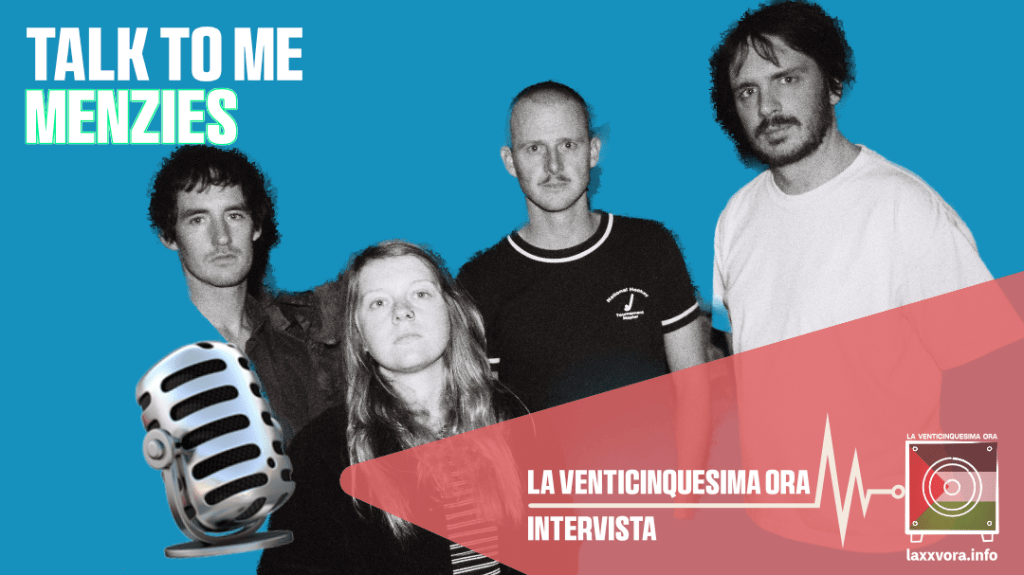
- Artista: Menzies
- Etichetta: Autoprodotto (uscita indipendente)
- Genere/Stile: Alt-Rock / Indie Rock
- Paese: Nuova Zelanda (Wellington, Aotearoa)
- Uscita: 8 Maggio 2026
- LPOTW
Leggi in italiano · Read the original interview in English
I Menzies arrivano dalla lontana Nuova Zelanda, una terra che ispira non solo noi dall’altra parte del globo ma anche gli stessi abitanti di questo splendido luogo. Il loro primo album, Holding My Cold Hand, Even Though Yours Is Warm, è uno dei nostri LP dell’anno: non è solo un insieme di canzoni, è un luogo, una stanza, un punto di contatto tra voce, spazio e memoria. Ogni brano ha una prossimità fisica rara, come se fosse stato registrato a pochi centimetri dal volto, con un’intimità che nasce da un’urgenza reale. È un album che si avvicina lentamente, si lascia ascoltare, si apre e ti avvolge.
La band di Wellington lavora con una sensibilità che unisce fragilità luminosa, immagini essenziali e una scrittura che procede per piccoli frammenti narrativi. Le canzoni sembrano composte da vignette, da scene che emergono mentre Chris guida lungo la costa, da parole che arrivano senza premeditazione e diventano racconto. Il disco vive in una dimensione temporale particolare che, seppur immersa nel passato, non è nostalgia: è più un presente che contiene ciò che è stato. Le immagini sono centrali, quasi quanto le parole: luce naturale, spazi vuoti, dettagli che contribuiscono a un ritmo che segue il respiro della storia.
Wellington è un punto fondamentale del loro percorso. La comunità artistica locale è viva, generosa, attraversata da collaborazioni che si intrecciano. I Menzies crescono dentro questa rete, e la loro musica riflette esattamente questo: un senso di appartenenza, di sostegno, di movimento collettivo.
Oggi la band si trova in un momento di passaggio. Il disco è uscito nel tempo giusto, con la maturità giusta, e ora il gruppo guarda avanti con entusiasmo: nuovi brani, nuovi concerti, nuove intuizioni. Questa intervista prova a entrare nel loro modo di costruire canzoni, nel loro rapporto con le immagini, nel loro senso del tempo.
Intervista
Read the original interview in English ↓
Nel vostro nuovo album c’è una prossimità fisica, come se ogni suono fosse registrato a distanza di respiro. Sembra di entrare in una stanza dove tutto è fragile ma necessario. Quanto è importante per voi preservare questa intimità, anche mentre più ascoltatori scoprono la vostra musica?
Grazie per averlo notato. Per noi è sempre stato importante avere le voci molto chiare nel mix, sia nei dischi sia nei live. Abbiamo lasciato volutamente alcuni grandi respiri nel disco perché in certi momenti emotivi sembravano giusti. Finché le canzoni ci sembrano reali ed emozionanti, siamo felici, indipendentemente da come vengono registrate.
Nel disco c’è una fragilità luminosa, una vulnerabilità che non cerca spettacolo. È una scelta consapevole, un’estetica, o semplicemente il modo più onesto che avete trovato per abitare le vostre canzoni?
Credo sia ciò che emerge naturalmente dal punto di vista lirico. Le parole spesso nascono mentre guido il mio van lungo la costa sud di Wellington, senza una grande premeditazione. Questo aiuta a far emergere cose più crude e sensibili. Un caro amico mi disse: “Scrivi parole come se fossi l’unico a sentirle, poi sii abbastanza coraggioso da metterle fuori”.
Le vostre immagini sembrano piccoli fotogrammi di quiete: luce naturale, spazi vuoti, dettagli che parlano piano. Quanto influisce questo minimalismo visivo sul modo in cui costruite ritmo e respiro delle canzoni?
Molto, dal punto di vista lirico. Le parole arrivano insieme alle immagini nella mia testa. Vedo la storia o la scena tanto quanto le parole la descrivono. Quando registro o suono dal vivo, quelle immagini sono sempre al centro.
Molti brani sembrano sospesi in un tempo che non è né passato né presente, come se la memoria fosse un luogo da abitare. Che ruolo ha questa dimensione temporale nella vostra scrittura? Vi interessa più ciò che è stato o ciò che potrebbe arrivare?
Sono più attratto da ciò che è stato. Molte canzoni sono composte da vignette, reali o immaginarie, che insieme formano una storia. Le vedo quasi sempre nel passato o nel presente del narratore. Non credo abbiamo mai scritto una canzone rivolta al futuro. Sarebbe una sfida interessante.
Guardando al vostro percorso, si percepisce una piccola comunità intorno a voi: persone che sostengono, collaborano, amplificano la vostra visione. Quanto conta questa rete nel dare forma alla vostra musica?
Siamo fortunati a vivere a Wellington. C’è una comunità artistica vibrante e incredibile. Mi ispirano costantemente le persone e ciò che creano. Molti saltano tra progetti diversi, si aiutano, collaborano. Ci sentiamo molto fortunati a essere parte di una comunità così solidale.
Questo album ha una coerenza rara, come se fosse arrivato nel momento giusto con la maturità giusta. Vi sentite all’inizio di un nuovo capitolo o in una fase di transizione? C’è già un suono, un’immagine, un’intuizione che vi chiama verso ciò che verrà?
Grazie. Ricordo che quando abbiamo fissato le registrazioni lo scorso anno sentivo che doveva uscire presto. Non volevo lasciarlo in sospeso troppo a lungo. Non so cosa abbia guidato quella sensazione, ma sono felice che abbiamo seguito quell’istinto. Sono molto entusiasta di ciò che verrà: abbiamo appena concluso il tour di presentazione in Nuova Zelanda, abbiamo nuovi concerti in programma e molto materiale nuovo su cui stiamo lavorando. Non vedo l’ora di sviluppare queste nuove canzoni.
Grazie a Chris Brown per la calda accoglienza e il tempo concesso, con l’augurio di poterli vedere dal vivo presto in Italia.
I Menzies raccontano per frammenti, e i frammenti si tengono insieme da soli. Holding My Cold Hand, Even Though Yours Is Warm è un disco che non alza mai la voce e proprio per questo resta: un respiro lasciato dentro il mix, una scena vista dal finestrino di un van sulla costa sud, una comunità che si passa gli strumenti di mano in mano.
Il prossimo capitolo è già in scrittura.
Original Interview (English)
↑ Torna alla versione italiana
In your new album there’s a physical closeness, as if every sound were recorded at breathing distance. It feels like entering a room where everything is fragile but necessary. How important is it for you to preserve this intimacy, even as more listeners discover your music?
Hi Fulvio, thanks for saying so. It’s always been important for us to have the vocals out clear in the mix in both our recordings and live shows. We intentionally left in some big inhales and exhales on the album because it felt right in some of the more emotional moments. So long as the songs feel real and exciting to us then we’re happy, no matter how they’re recorded.
There’s a luminous fragility running through the record, a vulnerability that doesn’t apologize and doesn’t try to be spectacular. Is this a conscious choice, an aesthetic, or simply the most honest way you’ve found to inhabit your songs?
I think it’s what just comes out from a lyrical perspective. The words are often formed while driving around in my van on the south coast of Wellington, without a large pre-thought of I want this song to be about this, or talk about that. I think this helps to bring up things that are raw and sensitive. I remember a dear friend saying to me “write words like you’re the only one who’s ever going to hear them, then just be brave enough to put them out”.
Your imagery feels like small frames of quiet: natural light, empty spaces, details that speak softly. How much does this visual essentialism influence the way you shape your songs, their rhythm and breath?
From a lyrical perspective quite a lot. The words come with images in my head. I think I see the story or the scenario just as much if not even more than the words themselves describe. When recording or performing the songs like those images or stories are front and centre in my head.
Many tracks seem suspended in a time that is neither past nor present, as if memory were a place to inhabit rather than something to recall. What role does this temporal dimension play in your writing? Are you more drawn to what has been or to what might be?
Definitely more drawn to what has been. A lot of our songs are made up of multiple vignettes of fact or fiction that form to tell a story. I see these as almost always being either in the past, or in the present moment for the narrator. I don’t know if we’ve ever even written a future-looking song. It would be a fun challenge.
Looking at your path, one senses a small community around you, people who support, collaborate, and amplify your vision. How important is this creative and emotional network in shaping your music?
We’re lucky to be based in Wellington, New Zealand. There’s an amazing and vibrant music and arts community here. I’m constantly inspired by the people and what they’re creating around me. And yes there’s a large amount of people jumping around between projects, helping each other out, we feel very lucky to be in such a supportive community.
This album has a rare coherence, as if it arrived at exactly the right moment with the right maturity. Do you feel at the beginning of a new chapter or in a transitional phase? Is there already a sound, an image, an intuition calling you toward what comes next?
Thank you. It’s interesting you say that, I remember when we were booking in the recording and setting the timeline for it last year having a feeling like it really needed to come out in the short term. Not wanting to let it linger for a long time, that it was important to keep moving and get it out. I don’t know exactly what drove that but I’m glad we stuck to it. I’m really excited for what’s next. We’ve just completed the album release tour in New Zealand, have a bunch of shows lined up, and have a bunch of new material we’ve been working on. I’m excited to continue fleshing these new songs out 🙂


 La Venticinquesima Ora
Lascia un commento